
Introduction: CBD Is Everywhere, But Is It Safe for Your Kidneys?
CBD oils, gummies, creams, drinks, and capsules are everywhere. Marketed for pain, inflammation, anxiety, sleep, and even chronic disease, cannabidiol (CBD) has quickly become one of the most popular wellness supplements in the world.
But with popularity comes confusion—and risk.
In this episode of Wellness Focused, Dr. Bismah Irfan, MD, a board-certified physician and natural kidney doctor, addresses a question she hears more and more from patients:
👉 Is CBD safe for your kidneys?
The answer is not a simple yes or no.
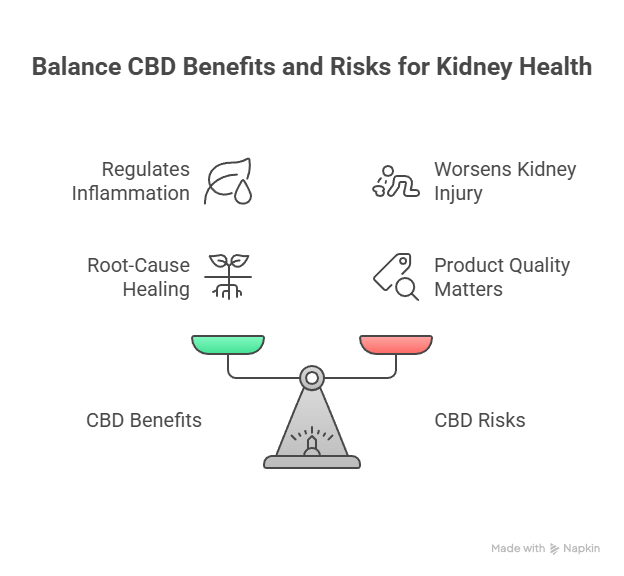
CBD interacts with a powerful regulatory network in the body called the endocannabinoid system, which includes receptors located directly in the kidneys. Under the right circumstances, this system can help regulate inflammation and blood flow. Under the wrong circumstances, it can worsen kidney injury—especially in people with diabetes, obesity, metabolic syndrome, or existing kidney disease.
As a natural kidney doctor, Dr. Irfan emphasizes that supplements should never be used in isolation from metabolic context, medication review, and root-cause evaluation.
Before you buy another bottle online, it’s critical to understand:
- How CBD actually works in the body
- How the kidneys respond to cannabinoids
- Why product quality matters more than most people realize
- Who should be cautious—or avoid CBD altogether
- Why root-cause healing must come first
Let’s break it down clearly and responsibly.
What Is CBD, and How Is It Different from THC?
CBD (cannabidiol) is one of over 100 cannabinoids found in the cannabis plant. Unlike THC (tetrahydrocannabinol), CBD:
- Does not produce a “high”
- Is not intoxicating
- Does not impair cognition
- Is legal in many regions when derived from hemp
THC, on the other hand:
- Is psychoactive
- Activates different brain pathways
- Can affect heart rate, perception, and coordination
This distinction matters for kidney health because, as any experienced natural kidney doctor will tell you, CBD and THC affect kidney blood flow, inflammation, and filtration differently—yet many products labeled “CBD” contain more THC than disclosed.
The Endocannabinoid System: Why the Kidneys Care About CBD
The body has its own internal cannabinoid system—the endocannabinoid system (ECS)—which helps regulate:
- Inflammation
- Blood flow
- Immune balance
- Metabolism
- Pain signaling
The kidneys express two main cannabinoid receptors:
- CB1 receptors
- CB2 receptors
CB1 Receptors
CB1 receptors are found in:
- Kidney blood vessels
- Tubular cells
- Glomerular structures
When overactivated, CB1 receptors have been linked to:
- Increased inflammation
- Worsening insulin resistance
- Oxidative stress
- Fibrosis (scarring)
- Progression of kidney disease
CB1 overactivation is especially common in:
- Diabetes
- Obesity
- Metabolic syndrome
- Fatty liver disease
This is a critical point emphasized by every natural kidney doctor practicing root-cause medicine: the same system CBD interacts with can either protect or harm the kidneys depending on metabolic health.
CB2 Receptors
CB2 receptors are more closely associated with:
- Immune regulation
- Anti-inflammatory signaling
Activation of CB2 receptors may:
- Reduce inflammation
- Support tissue protection
- Modulate immune responses
Much of CBD’s potential benefit is thought to come from indirectly supporting CB2 activity while avoiding excessive CB1 stimulation—when used carefully and appropriately.
So… Is CBD Good or Bad for the Kidneys?
The honest answer is: it depends.
CBD is not inherently toxic to the kidneys. But it is also not universally safe—especially when used without guidance from a qualified natural kidney doctor.
Potential Benefits (in the Right Context)
When properly sourced and carefully dosed, CBD may:
- Reduce inflammation
- Support pain control
- Improve sleep quality
- Reduce stress-related signaling
- Modulate immune responses
These effects may indirectly support kidney health—but only when the metabolic environment is stable.
Potential Risks (Often Overlooked)
CBD may pose risks when:
- Products are contaminated
- Doses are excessive
- Underlying metabolic disease is uncontrolled
- Drug interactions are ignored
Let’s explore why quality and context matter so much.
Quality Is Non-Negotiable: The Hidden Dangers of CBD Products
One of the biggest dangers with CBD is not CBD itself—but what comes with it.
Many over-the-counter CBD products have been found to contain:
- Heavy metals
- Pesticides
- Solvents
- Mold toxins
- Synthetic cannabinoids
- Much higher THC levels than stated
For kidney patients, this is especially concerning because the kidneys are responsible for clearing many of these toxins—a key reason natural kidney doctors caution against unverified supplements.
Why This Matters for Kidney Health
- Heavy metals directly damage kidney tissue
- Pesticides increase oxidative stress
- THC can worsen blood pressure and kidney blood flow
- Synthetic additives may trigger inflammation
Without pharmaceutical-grade testing, there is no reliable way to know what you’re actually ingesting.
CBD and Drug Interactions: A Critical Consideration
CBD is metabolized through the cytochrome P450 enzyme system, which also processes many prescription medications.
CBD can interfere with:
- Blood pressure medications
- Blood thinners
- Anti-seizure drugs
- Immunosuppressants
- Certain antibiotics
- Statins
Patients with kidney disease are often on multiple medications—making oversight by a natural kidney doctor especially important to prevent unintended interactions.
Metabolic Context: Why Blood Sugar and Weight Matter
One of the most overlooked factors in CBD safety is metabolic context.
In people with:
- Diabetes
- Insulin resistance
- Obesity
- Metabolic syndrome
The endocannabinoid system is often already overactive—particularly at CB1 receptors. According to functional and natural kidney doctors, adding cannabinoids into this environment without correcting blood sugar and inflammation can worsen kidney outcomes.
CBD Is Not a Root-Cause Solution
CBD may help manage symptoms like pain, anxiety, or sleep disturbance—but it does not correct the drivers of kidney disease.
A natural kidney doctor prioritizes:
- Blood sugar regulation
- Gut health
- Stress and sleep balance
- Toxin reduction
- Anti-inflammatory nutrition
CBD should only be considered after these foundations are addressed.
Conclusion: Informed Choices Protect Your Kidneys
CBD is neither a miracle cure nor an automatic danger. It is a biologically active compound that interacts with systems already vulnerable in kidney disease.
When used indiscriminately, CBD can create harm. When used thoughtfully—under the guidance of a qualified natural kidney doctor—it may offer limited symptom support in select cases.
The most important step isn’t deciding whether to use CBD. It’s understanding why, what, and when—and ensuring the foundation of kidney health is protected first.